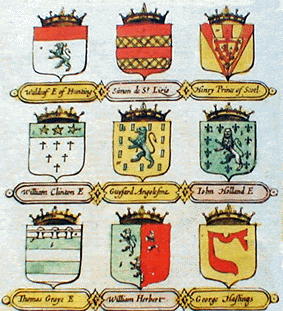
Hastings & Earldoms
The Hastings' family were lords [barons
or great land-holders] who began to garner wealth as their fortunes increased
under successive sovereigns. One, member of this family George
Hastings was made an earl
of Huntingdon. Another William, was involved
in several battles during the Wars of the Roses, he controlled the Wool Staple
at Calais and was finally beheaded by the reviled Richard III whilst William's
mistress died in distress.
Blazon: Gules, a maunch§ or
.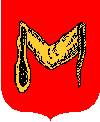
The maunch or ladies loose sleeve was
purportedly used as a favour by one early Hastings jouster.
Hastings Arms: Arg, a maunch, sable. However the imagery
is more likely to be an allusion to the shape of the English
Channel, in French, 'La Manche', wide at the western end and
narrow in the east. |
The earldom of Huntingdon descended from Henry Prince of Scotland, earl
of Huntington and Northumberland (d.1152).
Henry married Ada [Adeline] de Warrene (b. abt. 1104
at Huntington, d.1178), Ada being the 6th
daughter of six children of William II de Warrene, earl of Surrey (d.1138).
Ada's fifth and youngest son, David became earl of Huntington (d.1219).
He married Matilda de Kevlioch ['Maud of Chester'] who had two children,
Isobel de Huntington and Ada de Huntington, the youngest, who married Henry
de Hastings. The elder daughter, Isobel de Huntington married Robert de
Bruis [Bruce]. [Another version2 says that David de Huntington
married Maud of Chester (d.1232/3) they produced two daughters, the
eldest, Ada of Huntington married Sir Henry de Hastings (d.1250). The title
earl of Huntington passed to a son of David earl of Huntington, John Le Scot,
Earl of Chester.
The earldom died with this Scottish noble in 1327 either at
Darnhall [Cheshire] or Darnall [Sheffield], perhaps whilst he was on his
way to his estate of Hallam Manor [which had been inherited from his great-grandfather,
David I of Scotland through his wife Matilda/Maud de Huntington, daughter
of Waltheof the last
English eorl] John died from poisoning, his wife was suspected. It
is of interest to note here that John Le Scot had an older brother Robert
Le Scot [~1191-1221]who would have inherited the earldom of Huntington,
the Huntington so mentioned by the playwright Anthony Munday as opposed to
perhaps a later appellation, the title earl of Huntingdon created for George Hastings by Henry VIII.
Sir Henry I de Hastings b. 1191 Fillongley,
Warwickshire d.1249/50 married Ada de Huntingdon*
[Huntington also known as Ada le Scot or FitzDavid, a daughter of David Earl of Huntington]
ca. 1224 and had a daughter, Eleanor and a son Henry, subsequently Sir
Henry I de Hastings this Sir Henry was probably involved in
the subjugation of Wales.
Sir Henry II de Hastings born ca. 1239 ,
died ca. 1269 at Abergavenny, Wales. Married Maud de Cantelupe
[Sometimes given as Joan/Joanne/Eve/ ]
First Baron Hastings
John I Hastings b. 1262 d. February 1313.
Was the First Baron [1st Lord] Hastings created
12909 1st Lord of [A]bergavenny [Wales] and Constable of Winchester
Castle. John had a wyvern support on each side of his shield and
a wyvern in the space above the shield10, probably as a recognition
of his services in Wales. He assisted Edward I in
the Scottish Wars and as a result in 1273 received a grant of lands
formerly held by Lord [Fitz?] Alan. In 1290 he was one of the [13] competitors
for the crown of Scotland9 through his mother Ada de Huntington
and which was eventually granted to John Baliol by King Edward I. Thus
it is likely that Sir Henry at some time held lands in right of his wife in Huntington near Haddington, Scotland.
John married firstly, Isabel de Valence d.1305 [Herbert? daughter of the Earl of Pembroke]
descended from Henry I. William de Valence was her father, the 3rd
Earl of Pembroke [Henry III's half brother]. They had a son, John Hastings
2nd Lord Hastings, Earl Hastings and Earl of Pembroke. Their [grand?9]
daughter was Elizabeth de Hastings. She married Roger de Grey 1st baron
Grey de Ruthyn and they had a daughter Elizabeth.
Roger married secondly, Isabel le Despencer
[daughter of Hugh Despencer, Earl of Winchester] by whom he had two sons,
Thomas who produced the Grey heirs and Hugh b. ca. 1310, d. 1347 at Sutton
Courtenay, Oxfordshire, who married Margaret [Margery] Foliot which led
to a line of the Hastings family. There arose later a conflict between the Greys and the Hastings heirs
over the Hastings estate, as a result the Hastings line never held the titles of Lord Hastings in their own life
times9
John II Hastings, 2nd Lord Hastings
married Juliana Leybourne [Leyburne]#9 who died in 1327. He
was called to Parliament between 1313 and 1325 as
one of the Lords or barons9 and was made governor of Kenilworth
Castle by Edward II in 1323, dying in June 1325.
Hugh Hastings was the brother
of John II Hastings The 'label' on the monumental brass to
Sir Hugh at Elsing indicates that he was the eldest
son.  See the Elsing Brass
The Hall at Elsing was in the Foliot family until Margery, Sir Richard
Foliot's daughter married Sir Hugh Hastings, commander of the army of
Edward III. in Flanders. As a result, Elsing Hall became the residence
of the Hastings family until it passed by the marriage of Anne, eldest
daughter and co-heiress of Sir Hugh Hastings to William Browne, shortly
before the year 1554. In Elsing Church there is a large east-facing
window containing stained glass with figures of Sir Hugh Hastings and his
wife as founders of the church.
Hugh's great grandson, Edward, lost the barony of Hastings to Reginald
lord Grey of Ruthin following a Court meeting at Elsing church. However
Edward did not accept the ruling of the Court and consequently spent
the remaining twenty-one years of his life in the Marshalsea prison.
See the Elsing Brass
The Hall at Elsing was in the Foliot family until Margery, Sir Richard
Foliot's daughter married Sir Hugh Hastings, commander of the army of
Edward III. in Flanders. As a result, Elsing Hall became the residence
of the Hastings family until it passed by the marriage of Anne, eldest
daughter and co-heiress of Sir Hugh Hastings to William Browne, shortly
before the year 1554. In Elsing Church there is a large east-facing
window containing stained glass with figures of Sir Hugh Hastings and his
wife as founders of the church.
Hugh's great grandson, Edward, lost the barony of Hastings to Reginald
lord Grey of Ruthin following a Court meeting at Elsing church. However
Edward did not accept the ruling of the Court and consequently spent
the remaining twenty-one years of his life in the Marshalsea prison.
 Laurence/Lawrence Hastings, b. 20th March 1319 Warwickshire,
d.29th August 1348 Abergavenny, Wales, 3rd Lord Hastings, 4th Earl of Pembroke2
[others say 11th] married [29th May, 1328 Hereford] Agnes de Mortimer9 of March [Agnes March], and was called to
Parliament9. He had the 4th earl
of Pembroke's Arms quartered with two Hastings maunches. The maunch emblazoned
on George Hastings arms indicates a family relationship
with the
4th Earl of Pembroke [South Wales] being continued until that time. The
orle fifteen martlets quartered barry indicate the arms of Aymer de Valence,
1st Earl of Pembroke's Arms [b.1296 d1323] Martlets are often associated
with the "The Crusades"10. Hastings, 4th Earl of Pembroke was
mainly a producer of wool at this time, much of which was sent by ship to
North Wales for processing and N.E. to the Bristol region2.
Laurence/Lawrence Hastings, b. 20th March 1319 Warwickshire,
d.29th August 1348 Abergavenny, Wales, 3rd Lord Hastings, 4th Earl of Pembroke2
[others say 11th] married [29th May, 1328 Hereford] Agnes de Mortimer9 of March [Agnes March], and was called to
Parliament9. He had the 4th earl
of Pembroke's Arms quartered with two Hastings maunches. The maunch emblazoned
on George Hastings arms indicates a family relationship
with the
4th Earl of Pembroke [South Wales] being continued until that time. The
orle fifteen martlets quartered barry indicate the arms of Aymer de Valence,
1st Earl of Pembroke's Arms [b.1296 d1323] Martlets are often associated
with the "The Crusades"10. Hastings, 4th Earl of Pembroke was
mainly a producer of wool at this time, much of which was sent by ship to
North Wales for processing and N.E. to the Bristol region2.
|
The Earls of Pembroke2 |
* R.C. 'Strongbow' 1st Earl.
* William Marshall 2nd Earl, 1145?- 1219 a
great English warrior. From old French
Mareschal or 'horse-servant'/groom [c.f.
Seneschal]-hence the phrase "To
marshal your forces"
* William Valence 3rd Earl.
* Laurence Hastings 4th Earl
* John Duke of Bedford 5th Earl.
* Marquis William de la Poole 6th Earl.
* Jasper Hatfield 7th Earl.
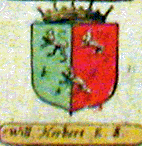 * William Herbert 8th Earl.
* Edward Prince of Wales 9th Earl.
* Marchioness Anne Bolleyne
* William Herbert 11th Earl |
John III Hastings 4th Lord Hastings 12th earl
of Pembroke [b.1347 Sutton Valence, d.1375 Picardy] was one of Edward II's
generals and was recorded as marrying Edward III's daughter, Margaret Plantagenet on the 19th May 1359, Reading,
Berks., and who died in 1361 at a comparitively young age3,
she was the 10th child Edward III. Edward and his Queen Philippa of Hainaut
had 13 children. John married secondly [July 1368], Anne Mauny [Manny] baroness
Mauny [b. 24th July 1355].
We next pick up a reference to a John IV Hastings [d. 30th Dec.1389, Woodstock, Oxon.]
5th Lord Hastings, 13th earl of Pembroke who married [24th June
1380 Kenilworth Castle, Warwicks.] Elizabeth Plantagenet of Lancaster
[b. 1363, d, 1425] daughter of John of Gaunt
Duke of Lancaster and Lady Blanche Plantagenet and thus sister of Henry
de Bolingbroke , later King Henry IV. Blanche was a Plantagenet of the
House of Lancaster. As a result of the marriage John was permitted
to quarter the royal arms of Plantagenet on his coat of arms10.
As such he could have adopted the royal crest. John Hastings, 5th Lord
Hastings, also had a second marriage to Philippa Mortimer [1385].
The marriage with Elizabeth was annulled in
1383. These two marriages may have led to property divisions. There was
no male issue from the two marriages and thus the title "Lord Hastings"
fell into abeyance9 There was a second marriage
for Elizabeth with John Holand d.1400, 1st Duke of Exeter [marr.24th June
1386 at Plymouth]. John Holand was the son of Sir Thomas Holland [1st Lord
Holland] and Joan 'The Fair Maid of Woodstock' [d. 7th August 1385]. The
marriage between Holand and Elizabeth Plantagenet produced up to seven children
three of whom were Constance Holand, John II Holland duke of Exeter and earl
of Huntingdon. Thirdly, Elizabeth married John Cornwall of Burford, 1st Baron
Fanhope from which there came two children.
Following Edward III's death, William Lord Latimer
was appointed to Richard II's council in 1377. There was open public
disgust at this. Lord Latimer served as Governor
of Calais from 1380-1
Another line descends from a
steward of King Henry II, William I de Hastings, who is a common
ancestor to the above lords of Hastings and Sir William Hastings, the
'Captain of Calais':
 William Hastings born 1430/1, Kirby
Muxloe, Leicestershire, married Catherine [Katherine] Neville 6th Feb. 1460/1,
sister of Richard Neville the 'king maker'. William was created a peer
[Lord Hastings] in 1461 by Edward IV on the battlefield,
following the battle of Towton led by Richard Neville,
earl of Warwick, the 'king-maker". The Hastings title baron of
Hastings had not fallen into
abeyance9 but having been granted to Lord Grey
of Ruthin in 1410 became available again at his death allowing
William to be titled Lord Hastings of Hastings. The battle of Towton was fought on Palm Sunday in snow
and icy conditions in which 30*-50,000 military were killed. Whatever
the number of dead, it is considered to be England's greatest loss of life
in a single battle. *Edward IV in a letter to his mother claimed 28,000,
or about 1/3 of the combatants.
William Hastings born 1430/1, Kirby
Muxloe, Leicestershire, married Catherine [Katherine] Neville 6th Feb. 1460/1,
sister of Richard Neville the 'king maker'. William was created a peer
[Lord Hastings] in 1461 by Edward IV on the battlefield,
following the battle of Towton led by Richard Neville,
earl of Warwick, the 'king-maker". The Hastings title baron of
Hastings had not fallen into
abeyance9 but having been granted to Lord Grey
of Ruthin in 1410 became available again at his death allowing
William to be titled Lord Hastings of Hastings. The battle of Towton was fought on Palm Sunday in snow
and icy conditions in which 30*-50,000 military were killed. Whatever
the number of dead, it is considered to be England's greatest loss of life
in a single battle. *Edward IV in a letter to his mother claimed 28,000,
or about 1/3 of the combatants.
The Battle of Towton 1461
Present at the battle for the Yorkist cause were:
Sir William Hastings, given Ashby manor in Leicestershire after the
battle.
Sir Richard Hastings
Ralph Hastings esq.
Richard Neville, Earl Warwick, was wounded. He later assisted the
Yorkist position in the North.
William Neville, Lord Fauconberg cr. Earl of Kent.
Edward Neville, Lord Abergaveny who was rewarded after the battle
See exhaustive list
for others
Edward and Warwick commanded the two central divisions with William
Neville [Lord Fauconberg] commanding a forward group [archers, pit diggers#
and caltrap throwers?] who moved in behind their own left and right flank
to reinforce the push as the battle progressed. The Yorkists were pitted#
against three divisions of Lancastrians, under Lord Dacre and one of the
Neville family.
The battle was at a stalemate until Norfolk's Yorkist reinforcements
arrived from the South along the Ferrybridge road to help overwhelm the
Lancastrians. The Lancastrian side included Henry Percy 6th Earl of Northumberland.
Recently a mass grave was found under "mounds" which are marked
on the 1960 O.S. map, on the side of Cock Beck near Castle Hill Wood. This
supports written evidence that those who died had been thrown into collective
grave pits. The battle has been described as a "bloody Yorkist victory",
the slaughter was frightful both in and after the battle, for the knights
fought on foot in heavy plate- armour, those on the defeated side were
unable to escape from the battle, many dying in Cock Beck6 which
would have coagulated with bloodat a place now called 'Bloody Meadows'.
The Yorkist losses at the Battle of Wakefield had been avenged.
# hence the term to be 'pitted against an adversary'?
|
Later Lord William Hastings commanded 10,000 in the left division for the
Yorkists at the Battle of  Barnet [4th April 1471]. Here Edward IV commanded the middle division
and Richard Duke of Gloucester [later Richard III], Edward's younger brother,
had commanded the right division against Oxford, Montague and Exeter
for the Lancastrians
Barnet [4th April 1471]. Here Edward IV commanded the middle division
and Richard Duke of Gloucester [later Richard III], Edward's younger brother,
had commanded the right division against Oxford, Montague and Exeter
for the Lancastrians
Again at the Battle of Tewkesbury Hasting's and his men formed one
of three divisions, this time the right flank, Edward the centre division
and Richard Duke of Gloucester the left flank. They here opposed Somerset,
Wenlock and Devonshire for the Lancastrians.
See The Tewkesbury
Battlefield Society.
Other honours were bestowed upon William when he became Master of the Mint
and Chamberlain of the Royal Household.
Hastings supported the Yorkist line, it was he who helped Edward
IV to escape to Holland/ Belgium/ Flanders in 1470.
William Lord Hastings became the Lieutenant-General of Calais about
1471-2 following the previous incumbent's death [Earl Warwick at Barnet].
Tyger Pursuivant is the title taken by the man-tyger supporters of Lord
William Hastings4. The Midgley crest was achieved as followers
of Lord Hastings.
 Tyger Pursuivant, a title taken from the man-tyger supporters
of Lord Hastings, from 1471 the Lieutenant-General of Calais, is known
only from a letter from Edmund Bedingfield, dated at Calais 17th August
1477, to Sir John Paston in Norfolk. Having conveyed local 'tydings' to Paston,
and reported that King Louis XI of France is beseiging St. Omer, he goes
on to say that, 'the said French King within these three days railed greatly
of my lord to Tyger Pursuivant, openly before 200 of his folks; wherefore
it is thought here that he would feign a quarrel to set upon this town
if he might get an advantage'. Louis XI was using Tyger Pursuivant as a
messenger, knowing that he would tell his master, Lord Hastings what he
had heard......Certainly Tyger Pursuivant's diplomatic language must
have been tested to the limit when he was railed at by the French King.
Tyger Pursuivant, a title taken from the man-tyger supporters
of Lord Hastings, from 1471 the Lieutenant-General of Calais, is known
only from a letter from Edmund Bedingfield, dated at Calais 17th August
1477, to Sir John Paston in Norfolk. Having conveyed local 'tydings' to Paston,
and reported that King Louis XI of France is beseiging St. Omer, he goes
on to say that, 'the said French King within these three days railed greatly
of my lord to Tyger Pursuivant, openly before 200 of his folks; wherefore
it is thought here that he would feign a quarrel to set upon this town
if he might get an advantage'. Louis XI was using Tyger Pursuivant as a
messenger, knowing that he would tell his master, Lord Hastings what he
had heard......Certainly Tyger Pursuivant's diplomatic language must
have been tested to the limit when he was railed at by the French King.
From: Heraldry, Henry Bedingfield, Rouge
Croix Pursuivant. |
Thus it appears that those who bear the crest of the tyger were
families closely linked to the Yorkist cause, opposing the Lancastrians.
The idgley achievement
contains a tyger sejant crest indicating that they were followers
of Lord Hastings, i.e. Yorkists. William is known to have been at Calais
in 1477 from a letter sent to Paston in Norfolk on the 17th August. Lord
Hastings was undoubtedly helping to control the wool staple at
Calais which had been established here under Edward III.
idgley achievement
contains a tyger sejant crest indicating that they were followers
of Lord Hastings, i.e. Yorkists. William is known to have been at Calais
in 1477 from a letter sent to Paston in Norfolk on the 17th August. Lord
Hastings was undoubtedly helping to control the wool staple at
Calais which had been established here under Edward III.
The Wool Staple1363-1558
A central depot for the collection and distribution of wool.
The wool staple in 1337 was at
Antwep but by 1353 had been moved to 15 towns in England, Wales &
Ireland. In 1360 The Commons petitioned for free trade, which led Edward
III to locate the Wool Staple from 1363 at Calais, which, following Crecy
and Poitiers was now in English hands. A group of 26 English merchants,
later termed Merchant Staplers or Merchants of the Staple, established a
company at aCalais.
Before the defeat of Calais in 1347, Calais had been a port sheltering
piratical Channel privateers7. Thus to remove these threats
of piracy and secure a continental bridgehead from which Edward could
extract revenue directly, Calais became the preferred entrepot staple.
It was easier to control the collection of revenue derived from wool here
and Calais was nearer to the markets of Flanders and parts of France. This
single location allowed Edward III to collect revenues directly without
having to go to The Parliament. Thus after 1347 Calais became an English
possession.
The wool merchants who held the monopoly at Edward III's staple received
considerations in exchange for lending the king money7, which
gave Edward a loan rather than asking the Parliament for money which would
have no doubt carried reciprocal requests from the Parliament thus
ham-stringing the king. The monopoly raised the prices of wool cloth in Europe.
This had the effect of stimulating the manufacture of cloth in England, which
until now had been a small industry.
Yorkshire as well as Leicestershire,
Suffolk and the Cotswolds were major suppliers of wool for Europe which
produced 40% of the revenue in Edward III's time and thus it is likely
that members of the families of Yorkshire were well aquainted with Calais.
English traders and their families were brought from England to replace
the French citizens of Calais.
The wealth of England was so contolled by the export of raw wool
in Edward III's time that the Lord Chancellor was commanded by Edward
to seat himself on what was to be known as 'The Woolsack' to remind the
Lord's of wool's importance to England's trade. The nursery rhyme "Baa Baa
Black sheep" is supposed to represent the collection of revenue from people
of all levels of society. Wool was equivalent to money, Richard I's ransom
was paid in wool. Until the 1700's sheep were kept primarily for wool, generally
lamb was not consumed and only mutton from rams and ewes which were unsuitable
for wool production were eaten.. Thus sheep in Medieval times were almost
exclusively used for wool production.
By 1280-1290 customs records show England was exporting 7.5 million
fleeces each year to Europe, this was about 5 times as many sheep as people.
During Edward III's reign, finished wool products overtook raw wool as
the main export as a result of the importation of skills of the weavers displaced
from Flanders. To encourage this development Edward III imposed a heavy duty
on raw wool but a much lower one on woollen cloth. Because these weavers
did not have long established restrictive Guilds in England it appears they
managed to under-sell the weavers of Europe. Even by the 1600's wool was
providing about three-quarters of England's wealth, this dependence on wool
for wealth led to, some believe, the search for new markets and the eventual
development of the British Empire.
Large tracts of agricultural
land were converted to sheep grazing in the reigns of the three Edwards',
partly as a consequence of earlier labour reductions during the three plagues
and further stimulated by price rises and large profits to be made from
wool.
Besides handling the wool monopoly, tin, lead and later English cloth
moved through Calais.
By 1375 the Treaty of Bruges had left only Calais, Bayonne and Bordeaux.
Some terms derived from wool which have entered the English Language:
The term 'bishop' with his crook means 'shepherd', 'dyed in the wool',
'wool pulled over the eyes', 'wool-gathering', 'spinster', 'fleece a
person' including 'Staple'
& 'staple export' are terms derived from Edward III's Wool staple7.
Calais
was held by England from 4th August 1347 until 1558 |
Following Edward IV and Hasting's return to England in 1471, William Hastings
was prominent in the forces fighting the Lancastrians at Tewkesbury
and commanded the 3rd division at Barnet. Richard Neville,
"The king-maker" was killed at Barnet. William commanded the English
forces in France during Edward IV's brief campaign of 1475. He acted as
chamberlain from 1461 until Edward's death in 1483
After Edward IV death in 1483 Thomas Grey earl Huntington,1st
marquis of Dorset, took Edward IV's mistress [Elizabeth Jane Shore]1.
It is said that William Hastings then took the
former king's mistress from earl Grey for his own. There was certainly
great enmity between the Greys' and the Hastings'.
Elizabeth [Jane] Shore [nee Lambert] who was the daughter of
a wealthy London mercer had married William Shore a goldsmith about 1470.
She was renowned for her beauty and wit, her marriage was annulled due
to her husbands impotence3.
Following William Hastings execution, Elizabeth Shore was accused
of sorcery, she was imprisoned in the Tower of London and made to do public
penance as a harlot, which was a tradition of the time, walking through
London in her "kirtle" [a skirt cut short] carrying a lighted taper. She
was freed by Thomas Lynon, a royal official who fell in love with her.
She died in poverty, possibly in 1527.
Richard, Duke of Gloucester arrested Hastings
on a false charge of treason on the 13th June 14831 and had
him beheaded without trial [beheading for treason was common for nobility]
the same day [some argue 14th or 20th] in the Tower of London. He is buried
in St. George's Chapel,
Windsor, Berkshire.
The death of William Hastings as protector of Edward IV left the
throne of England clear for Richard 5 who became Richard III
in the same year, yet Richard was to meet his end only two years later
at the Battle of Bosworth.
|
King Richard III was the last Yorkist king of England, he usurped the
throne in 1483 and took his nephews Edward V and Richard. Their disappearance
led to rumours that he had had them killed in the Tower of London. In 1674 two male skeletons were discovered sealed into one of the tower
walls although the 1933 forensic examination of these bones did not
lead to an identification.. However, if the D.N.A. was tested today
there could be a determination. Importantly we now have Richard III's
D.N.A. and as Edward V and Richard, the two 'princes in the
Tower' were nephews of Richard III through their common
ancestors, Richard Plantagenet, Duke of York and his wife Cecily
Neville it could be possible to make some determinations. However,
even more intriguing, if the princes D.N.A. were shown to
be related to Richard Plantagenet it might lay to rest the more recent
claim that Edward IV, the father of the princes was the legitimate son
of Richard Duke of York. This claim has led some to believe that
the true claim to the English crown lies in the Abney-Hastings line.
Interestingly the present Crown
refuses to have these bones tested, perhaps there is something to
hide! For the suspected murders, King Richard III is considered to have been an evil and unscrupulous man.
Hence the evolution of the modern Richard III Society to try
to amend the image. |
Although William Lord Hastings was beheaded, the Hastings family retained
Ashby Manor in Leicestershire as William's son, Edward [b. 1466]
supported the Royal cause at the Battle of Bosworth.
Edward Hastings [d.1506] was second baron Hastings and High Sheriff
of Yorkshire in 1483 This Edward had held this position previously
four times in Edward IV's reign. No Sheriff of Yorkshire with the name
Hastings appears after 1483. However the son of Edward Hastings, George,
was re-created earl of Huntingdon [
George Hastings b. abt. 1488 d. 1545
Baron Hastings, Earl of Pembroke, was granted the earldom of Huntingdon
['1st earl of Huntingdon', i.e. the title was re-created] on 8th
December 1529, following William Herbert who had
also been made the11th Earl of Pembroke.
According to Graham Kirkby, George
Hasting's son was christened by Henry VIII in 1529 as [Hon] Aubrey
Craven Theophilus Robin Hood Hastings. It was Henry VIII who helped
to popularise the story of Robin Hood for he, and therefore his Court were
exposed to pageants, ballads and muscicians all extolling the virtues of
the legend. It was with Anthony Munday's plays that the person loosely described
as Robin of Locksley [from the 'Sloane Manuscript', 1600, and Dodsworth,1622]
was raised to the level of an earl, echoing John Major's [1521] allusion
to a "noble outlaw". Henry's chief antiquarian, John Leland in 1542 referred
to Robin Hood as a nobleman. Did George Hastings, Henry VIII and the much
older Robin Hood of ballads become inextricably linked here? The title
earl of Huntingdon certainly had a chequered past being the title of the
last earl of Anglian descent executed by William I
see: Waltheof
the Last Eorl
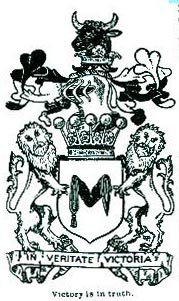
George's Coat of Arms are emblazoned with a maunch, this could be from
the fact that Lawrence Hastings was earlier, the 4th Earl of Pembroke
who had two maunches quartered.
Earls of Huntingdon according to John Speed and The Complete Peerage:
| JOHN SPEED2:
* Waltheof
Earl of Huntington
* Simon de St. Lizours
* Henry Prince of Scotland
* William Clinton E.- see Nottingham coup
* Guyfard Angolesme
* John Holland E.
* Thomas Grey E. [3rd son]
* William Herbert
* George Hastings
|
COMPLETE PEERAGE
Waltheof
Simon de St Liz
David I, king of Scotland
Henry of Scotland
Simon de St Liz II
Malcolm, king of Scotland
William the Lion, king of Scotland
Simon St Liz III
David of Scotland
John the Scot
William de Clinton
Cuichard d'Argle
John de Holand, later also duke of Exeter
John Holand
Henry Holand
Thomas Grey
William Herbert
George Hastings |
Francis Hastings b.1514 d.1561
The second son of George Hastings through Anne Stafford of Ashby-de-la-Zouche
became the 2nd Earl of Huntingdon in 1529 granted by Henry VIII. Francis
was one of the Royalist leaders who helped to suppress The Pilgrimage
of Grace [1536]. Francis married Catherine Pole [d.1576] possibly a
descendant of the Pole family of Welshpool.
 Henry Hastings b.abt.1535 d.1595 became the 3rd Earl of Huntingdon.
He married Catharine the daughter of the Duke of Northumberland. His
mother was Catherine Pole who was the great-granddaughter of the
Duke of Clarence who was a brother to Edward IV and Richard III. As a result,
Henry could have claimed succession to Elizabeth I but he predeceased
her.* He was a custodian for Mary Queen
of Scots in 1569 and became president of the Council Of The North
in 1572. He compiled a history of the Hastings lineages which is now held
in the British Museum. Henry and Catherine had no issue thus the earldom
passed to George Hastings.
Henry Hastings b.abt.1535 d.1595 became the 3rd Earl of Huntingdon.
He married Catharine the daughter of the Duke of Northumberland. His
mother was Catherine Pole who was the great-granddaughter of the
Duke of Clarence who was a brother to Edward IV and Richard III. As a result,
Henry could have claimed succession to Elizabeth I but he predeceased
her.* He was a custodian for Mary Queen
of Scots in 1569 and became president of the Council Of The North
in 1572. He compiled a history of the Hastings lineages which is now held
in the British Museum. Henry and Catherine had no issue thus the earldom
passed to George Hastings.
* Henry Hastings is unlikely to have 'dared claim the right to the crown as Elizabeth's successor. It
must be remembered that Henry VIII killed Katherine Poole/Pole's father
Henry and Henry Poole/Pole's mother Margaret countess of Salisbury, both
on the ground that they were threats to his reign and succession. Henry
Hastings would have been a fool to have made such a claim himself, though there was speculation about it. The Spanish Ambassador, De
Quadra, wrote to Philip of Spain in 1560: "Should any disaster befall her [Elizabeth] I am told that the Catholics would choose for their King
the son of the Countess of Lennox [James VI of Scotland]... The Queen professes to intend to nominate Hastings; but Hastings himself thinks
that the Tower his more likely destination." (R.J. Beevor Hastings of
Hastings, p. 17). I think he would have learnt some discretion, if only because of
all of his grandfather, gt-grandmother, 2x g-uncle and 3x gt-grandfather had been executed on charges of high treason.'
[Tim Powys-Lybbe ]
George Hastings
born abt. 1540 d. 1604 became the 4th Earl of Huntingdon, his son
was Henry Hastings.
Henry Hastings
b.1560 d. 1650 does not appear to have carried the Earldom, a famous
sportsman.
Henry Hastings b.1586 d.1643, the 5th Earl of Huntingdon.
His two sons were Ferdinando Hastings and Henry baron of Loughborough
Ferdinando Hastings b.1608 d.1656 was the 6th Earl of Huntingdon.
A suviving son, Theophilus Hastings succeeded to the Earldom. Note it was
at this time that Anthony Munday introduced into his play, Robin Hood as
the "Earl of Huntington"
Theophilus Hastings the 7th earl of Huntingdon. He had three
children, George the 8th Earl, Theophilus the 9th Earl and Lady Elizabeth
Hastings [1682-1739]
GeorgeHastings the 8th Earl of Huntingdon.
Theophilus II Hastings 9th earl of Huntingdon, b.1696 d.1746.
He married in 1728 Selina [Countess of Huntingdon] b. 1707 d.1791.
She was famous for her great beneficiaries to the Methodist movement throughout
England. They had at least two children, Francis Hastings [b.
1729 d.1789] who did not marry and Elizabeth [b.1731 d.1808].
Elizabeth Hastings received the baronies of Hastings but the title earl of Huntington became dormant. Her husband was John Rawdon, Earl
of Moira.
A descendant of Francis 2nd Earl of Huntington, Theophilus
Henry Hastings [b.1728 d.1804] ASSUMED the title of earl of Huntingdon
but did not prove his lineage before he died. His nephew Hans Francis
Hastings did so. At this time Francis Rawdon-Hastings [b.1754 d.1826] was
the 1st marquess of Hastings.
Hans Francis Hastings b. 1779 d.1828 proved his right to the
earldom
of Huntingdon in 1818 but not the baronies, whereafter he became a member
of the House of Lords. By the time of Francis 10th Earl of Huntingdon's death on 2nd October
1789, due to the fact he had no issue, the the ancient baronies of Hastings, Botreux & De
Moleyns devolved to his eldest sister,
Elizabeth (who later married the First Earl of Moira to become Countess
Moira). The baronies were carried by her into the Rawdon family and are now possessed by the
Countess of Loudon.
The earldom of Huntington was suspended for 300 years from John Le Scot's
death in 1327 at Darnhall [Cheshire] until 'recreated' in 1529 in George
Hastings as the earldom of Huntingdon.. However according to John Speed,
1610, the earldom of Huntington was granted
to William Clinton [Fiennes] in Edward I's time, Guyfard Angolesme, John
Holland, Thomas Grey & William Herbert until the Eerldom of Huntingdon
was 'recreated' in George Hastings.
This may explain why Munday the playwright in 1598 used 'Robin Hood'
for the first recorded time as an alias for the earl of Huntington, because the title had been dormant for 271
years with the Scots. Did Henry VIII create the earldom of Huntingdon in deference to Munday's plays of which the king
was so fond?
 HOME PREVIOUS
See: EARL WARWICK
TITLES OF THE NOBILITY
MIDGLEY OF BRADFORD
Notes:
* This Ada de Huntington was also referred to as
Ada [le] Scot[t] or Ca[e]nmore / Ceannmhor
# There is a Leybourne Grange near West Malling in Kent.
§ Maunch = a sleeve, The "Hastings
Sleeve" was supposedly from the dress of Hugh de Hasting's wife, Erneburga
de Flamville sometime after after 1130 A.D. When asked for a favour, not having
anything loose to hand, she tore off the sleeve which she then draped
over Sir Hugh's shield before a tournament. Technically medieval women
did not own property and thus gave "favours" to their knight. The French
call the English Channel 'La Maunche' as, like a medieval sleeve, it is
narrow at one end and wide at the other.
References:
1. Hallam, Elizabeth [Gen.Ed.] The Plantagenet Encyclopaedia, Tiger
Books, London, 1996.
2. Speed, John, The Counties of Britain, 1610.
3. Johnson, Paul, The Life and Times of Edward III, Weidenfeld &
Nicolson, London,1973.
4. Bedingfield, Henry, Heraldry, Bison Books, 1993.
5. Hallam, Elizabeth [Ed.], The Plantagenet Encyclopaedia, Tiger
Books, London, 1996
[ from The Wars of the Roses, pp 252-5, 263, 282,
284, 286.]
6. Rayner Robert, A Concise History of Britain, Longmans & Green,
1934.
7. Lee Christopher, This Sceptered Isle, Penguin/BBC
Books, 1997.
Copyright © Tim Midgley, January 2002, revised 11th October 2018.